Gardening the BACKYARD
A garden is a collection of plants, planted together intentionally.
What can this intentionality achieve?
BACKYARDS should include two types of planting: edible, and ecological.
Edible planting
Edible herbs, vegetables, and fruits. The exact species will be case-by-case, depending on site conditions and community preferences. Aside from suitability to local conditions, there are important additional requirements:
-
Not invasive to native vegetation
-
Not harmful to local wildlife
-
Easy to harvest and eat on a small garden scale (avoiding, for example, grains that need a lot of space and water, cashews that are toxic to touch before processing, olives that require extensive processing, etc.)
“Soft landscapes are slower and provide the opportunity to reconnect, to literally stop and smell the roses. Socially and environmentally soft landscape interventions provide a win/win situation. Soft landscapes can restore biodiversity, rebuild wildlife corridors, and absorb heat; leaves transpire to locally cool the air, provide natural shade, absorb sound and filter water and airborne pollutants.”
- Souter-Brown, 2015.
Ecological planting
Ecological planting must be endemic to the region of the BACKYARD. As such, the exact plant species will need to be determined case-by-case by ecologists. However, there are important considerations that apply to all situations:
-
Habitat for wildlife:
-
Arrangements of native plants at different heights and densities
-
Groundcovers to protect crawling insects, reptiles, amphibians
-
Grasses and shrubs to shelter small mammals, birds, marsupials, reptiles
-
Trees to provide perches for birds and marsupials
-
-
-
Food for wildlife:
-
Native pollen-rich flowers for pollinating insects (melaleucas, leptospermums, callistemons).
-
Native nectar-rich flowers for birds and butterflies (grevilleas and banksias).
-
Diverse native plant species to support a diverse range of animal/insects that rely on specific plants. Consider local endangered wildlife that needs extra support.
-
-
Nitrogen fixers:
-
Pioneer species that nourish the soil and improve the health of all other plants (e.g. casuarinas, hardenbergias, acacias).
-
-
Mix of deep and shallow rooted plants:
-
Shallow-rooted plants to reduce soil dryness and compaction, and increase soil biodiversity
-
Deep-rooted plants to reduce erosion and improve water infiltration, soil structure, soil biodiversity, and carbon sinking ability.
-
-
Trees for urban comfort:
-
Wide canopies to provide shelter, shade, and comfort for walkways and seats.
-
Narrow, tall canopies to provide wind screens.
-
Overall improving air filtration and urban cooling.
-
-
Resilient, drought-hardy species:
-
Select plants endemic to harsh and exposed regional ecosystems, which will be better suited to the sun, wind, and heat of urban centres, and will also reduce water needs and build ecological resilience in an increasingly extreme climate.
-
Thoughtful garden design
Ecological gardens will require less maintenance, since plants endemic to the region are adapted to regional conditions and thus require fewer inputs. Wildlife will feel safer with less disturbance.
Edible gardens will require daily maintenance by the Caretakers. Most plants are not endemic, have distinctive fruiting/growth seasons, and require crop rotation.
In the effort to cultivate health- and environmentally-conscious gardens, all maintenance needs to be organic. We must create complex, self-balancing ecosystems that do most of the work themselves. Create natural barriers against pests instead of dousing our food with toxic chemicals, to avoid collateral harm to beneficial species, to our kids and pets. Prioritise building plant companionship and soil biology, instead of relying on short-acting synthetic fertilisers.
When we think about pest control, think about how it happens in nature: predatory wildlife to feed on pest populations. We can cultivate this relationship in our own gardens, by curating a diverse ecosystem that invites wildlife:
-
Plant native flowering trees, shrubs, groundcovers, and include a healthy pond. This mix will attract birds who munch on the moths, beetles who munch on the aphids, frogs who munch on the crickets and flies, lizards who munch on the roaches and ants.
-
Plant plenty of herbs - their flowers attract pollinators, and their scents confuse and deter pest insects. For example, sage is a well-known deterrent for brassica pests due to its strong smell.
Maybe the wildlife will nibble on the food crops sometimes.
It’s a small price to pay for 24/7 pest control.
The same nature-logic applies to plant nutrition. Consider the relationship between plants, what they need, what they can give to each other.
Then we create plant guilds. A guild is an arrangement of plants that creates mutually beneficial relationships. There are a few important considerations we take into plants when designing guilds:
Companion plants
Integrate companion plants, which provide benefits to their neighbours:
-
Carrots break the soil up and reduce compaction, so they are helpful for plants with underground growth like onions and potatoes.
-
Nasturtium flowers are highly attractive to pollinators like hoverflies and bees, and repel pests like cabbage white flies and aphids.
A classic example from Native American tradition is the Three Sisters guild: beans, corn, and squash:

Common needs
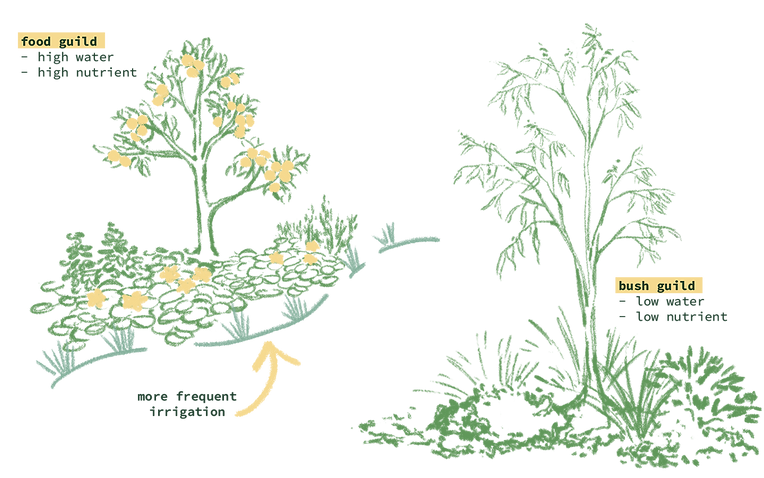
Group plants with similar watering and nutritional needs:
-
Plants that prefer moist soils should be placed together, and their section of the garden needs to be watered more frequently.
-
Plants that require high phosphorus (most fruiting plants) should be placed away from phosphorus-sensitive species (most Australian natives), since fertilising one would kill the other.
Enemies
Be mindful of incompatible plants.
-
Tomatoes need high calcium to prevent blossom end rot, and brassicas consume a lot of calcium. Putting these next to each other often causes health issues in both plants, as they deprive each other.
-
There are classic incompatible plants, which are shown in the diagram, but every plant needs to be researched carefully, whether they spread diseases, compete for resources, or attract pests.

Crop rotation
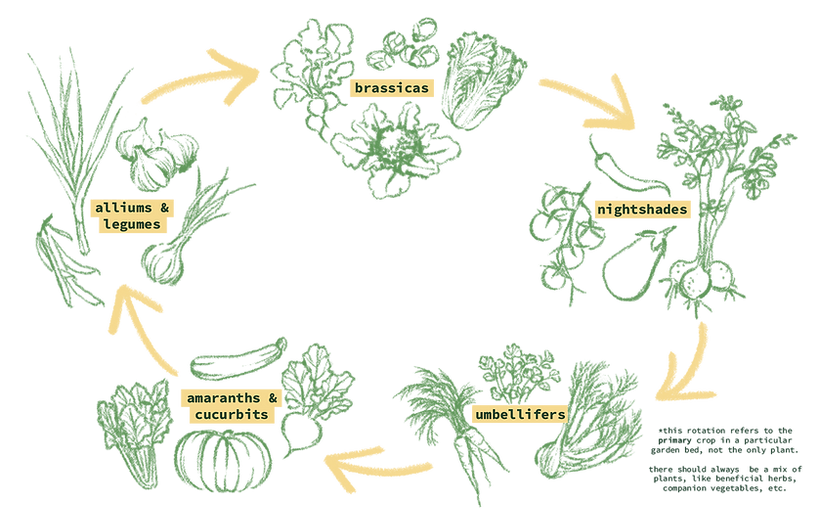
Rotate crops with each harvest season:
-
The modern agricultural practice of planting the same thing in the same spot over and over again depletes and compacts soil, whereas crop rotation keeps the nutrient cycle flowing and the soil healthy.
-
This family rotation order is based on which nutrients are added and taken from the soil, informed by Miles, 2021: